

Regenerative, orthobiologic care for lumbar spondylosis — the facet joint arthritis behind so much stubborn low back pain.
Spondylosis is simply the medical word for arthritis of the spine. In the lower back it most often points to wear in the facet joints — the pair of small, cartilage-lined joints at the back of every spinal segment that let you bend, arch, and twist.
Those joints carry you through every movement of every day. Over the years the cartilage thins, the joint surfaces roughen, and the joint becomes inflamed — the very same osteoarthritis process that wears a knee or a hip, just happening in your spine.
When a facet joint is arthritic and inflamed, it aches. And the muscles around it tighten to guard it — which layers a second, muscular pain on top of the joint pain. That is why low back arthritis so often feels like both a deep joint ache and a band of tight, sore muscle.
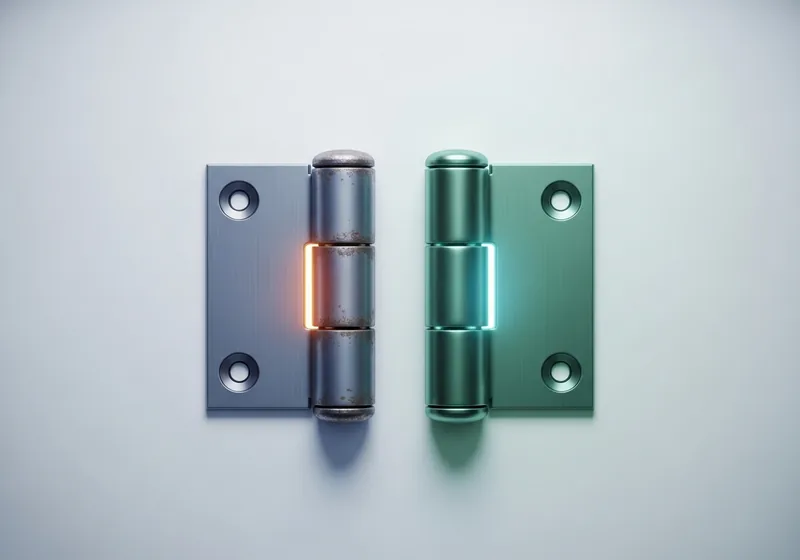
A facet joint is a hinge. A new hinge swings silent and smooth. After years of use the surfaces wear, it stiffens, and it complains every time the door moves. The hinge is not broken — it is worn, inflamed, and asking for attention. An arthritic joint in your spine is no different, and like a hinge, it responds to the right care.
Facet joint arthritis has a recognizable pattern — and it behaves differently from a disc problem. If several of these fit you, the joints are likely involved.
Facet pain tends to sit a little to the side of the midline — right over the joints themselves — rather than dead center.
Arching backward or rotating closes and loads the facet joints. Reaching up to a high shelf or turning to look behind you can be the classic trigger.
Many patients feel best leaning forward on a cart or sitting down — often the opposite of a disc problem, which tends to dislike sitting.
Arthritic joints are stiff and creaky after rest, then loosen and "warm up" once you get going — and tighten again at the end of a long day.
An irritated facet joint can spread pain into the buttock or the back of the hip — but it usually stops there, rather than traveling down past the knee.
Red flag: sharp pain shooting down the leg with numbness points to a nerve, not just the joint.New or worsening leg weakness, numbness in the groin or inner thighs, or any change in bladder or bowel control are not part of ordinary spinal arthritis.
Watch for: these need prompt, in-person evaluation — call us or seek urgent care the same day.Facet arthritis is one of the most ordinary things a spine does with age. It shows up on imaging in a steadily rising share of people — including a great many who have no back pain at all. In a large review of pain-free adults, facet degeneration appeared in roughly 4% of 20-year-olds and climbed to about 83% by age 80.
So a report that uses words like "facet arthropathy," "facet hypertrophy," or "spondylosis" does not, by itself, prove those joints are the source of your pain. Plenty of people carry the same report and feel fine.
But when the picture lines up — when your exam, your pain pattern, and your imaging all point to the same joints — the facet joints are a genuine, treatable pain generator. They are estimated to be the source in 15–45% of chronic low back pain. That is why Dr. Booth reviews your imaging with you, matched against your story, before recommending anything.
"Arthritis is wear, not a verdict. Worn joints can still be helped."
— Orthobiogen care philosophy
An arthritic facet joint is not only mechanically worn — it is chemically inflamed. Calming that inflammation, in and around the joint, is a large part of what brings relief.
A small sample of your own blood is concentrated for its platelets and growth factors. Placed into and around the facet joints, it is used to support a healthier joint environment — not simply to mute the pain signal.
Facet joints are small, paired, and stacked at multiple levels — arthritis rarely involves just one. Precise, image-guided placement, level by level, is what makes the treatment specific.
The arthritic joint, and the muscles that have spent months guarding and bracing around it, are part of the same problem. Effective care addresses both, not one in isolation.
For facet joint arthritis, most patients are offered steroid injections or radiofrequency ablation — burning the small nerve so the joint can no longer send pain signals. Here is how an orthobiologic approach differs.
| Facet Steroid Injections | Radiofrequency Ablation | Orthobiogen |
|---|---|---|
| ✗ Suppresses joint inflammation with corticosteroid — temporarily | ✗ Burns the nerve so the joint cannot signal pain | ✓ Treats the arthritic joint itself with your own biologics |
| ✗ Does nothing lasting to the joint | ✗ Silences the messenger; the worn joint is left untouched | ✓ Aims to support a healthier joint environment |
| ✗ Corticosteroid — repeated use can weaken nearby tissue | ✗ A heat lesion of the nerve, not a treatment of the arthritis | ✓ Platelets or marrow drawn from your own body |
| ✗ Limited — steroid doses are capped per year | ✗ Nerves regrow — relief fades and the burn is repeated | ✓ Repeatable, and aimed at the source rather than the signal |
| ✗ Often a brief visit with little imaging review | ✗ Often a brief visit with little imaging review | ✓ Your imaging walked through with you, joint by joint |
| ✗ "Try a shot and see," with little candidacy screening | ✗ Commits you to a repeating cycle of nerve burns | ✓ An honest answer on whether you are a candidate, first |
No. Arthritis is wear, not a verdict, and worn joints can still be helped. An arthritic facet joint is not only mechanically worn — it is chemically inflamed, and calming that inflammation in and around the joint is a large part of what brings relief.
Not by itself. Facet arthritis is one of the most ordinary things a spine does with age, appearing in roughly 4% of pain-free 20-year-olds and climbing to about 83% by age 80, and plenty of people carry the same report and feel fine. The facet joints are a genuine, treatable pain generator only when your exam, your pain pattern, and your imaging all point to the same joints.
Facet steroid injections suppress joint inflammation only temporarily and do nothing lasting to the joint, and radiofrequency ablation burns the nerve so the joint cannot signal pain — silencing the messenger while the worn joint is left untouched, and nerves regrow so the burn is repeated. Regenerative care treats the arthritic joint itself with your own biologics, aiming at the source rather than the signal.
Generally no. Regenerative orthobiologic treatment is typically not covered by insurance. If you move forward, the costs are discussed openly and in full before anything is scheduled — no surprises.
Start with a free 15-minute introductory telemedical consult — a no-pressure conversation about your history and any imaging, with a candid read on whether regenerative care is a reasonable fit. The fastest way to begin is the secure online intake form, and Dr. Booth's team follows up with you directly.
In a systematic review of more than 3,000 adults with no back pain, facet degeneration appeared in a sharply rising share of people with each decade of life — a reminder that an "arthritis" report is, very often, the spine simply showing its mileage.
Source: Brinjikji W, et al. Systematic Literature Review of Imaging Features of Spinal Degeneration in Asymptomatic Populations. AJNR Am J Neuroradiol. 2015;36(4):811–816. Figures describe adults with no reported back pain.
The first step is a complimentary, 15-minute introductory telemedical consult. It is a no-pressure conversation to hear your story, look at what you have already tried, and give you a candid sense of whether regenerative care is a reasonable fit for your back arthritis.
Please note: complimentary telemedical consults have limited availability because of Dr. Booth's clinical schedule. If a slot is not immediately open, we appreciate your patience — or you are welcome to request a standard in-person appointment instead, which can often be arranged sooner.
One more thing we believe in saying plainly: regenerative orthobiologic treatment is generally not covered by insurance. If you move forward, costs are discussed openly and in full before anything is scheduled — no surprises.
The fastest way to begin is our secure online intake form. You share your background once, and our team reaches out to you directly.
Lower back pain rarely has a single cause — and these conditions often overlap and feed one another. Explore the others we treat with regenerative, orthobiologic care.
Deterioration of the cushioning discs between the back bones.
Learn more →Lower back pain that radiates down the leg.
Learn more →Arthritis below the beltline, where the spine meets the pelvis.
Learn more →Muscle knots and spasms, often driven by joint inflammation.
Learn more →
Call to schedule, or ask about a free 15-minute introductory telemedical consult. Consult slots are limited by Dr. Booth's schedule — if none is open, an in-person appointment can often be arranged sooner.