

Regenerative, orthobiologic care for knee ligament sprains and partial tears — supporting the ligament's own healing, with an honest answer when surgery is the better path.
Four strong ligaments hold the knee together. Two cross inside the joint — the anterior and posterior cruciate ligaments (ACL and PCL) — controlling forward-and-back stability. Two run along the sides — the medial and lateral collateral ligaments (MCL and LCL) — controlling side-to-side stability.
A ligament injury is a sprain, and sprains are graded: grade I is stretched, grade II is a partial tear, grade III is a complete tear. Where the injury sits, and how severe it is, changes everything about what to do next.
And here is the part worth knowing: the four ligaments are not equal. The MCL has a good blood supply and often heals well, even when partially torn. The ACL, deep inside the joint, heals poorly on its own — and a complete ACL tear in an active person is usually a surgical conversation. The large middle ground — sprains and partial tears — is where there is the most to gain from supporting a ligament's own healing.
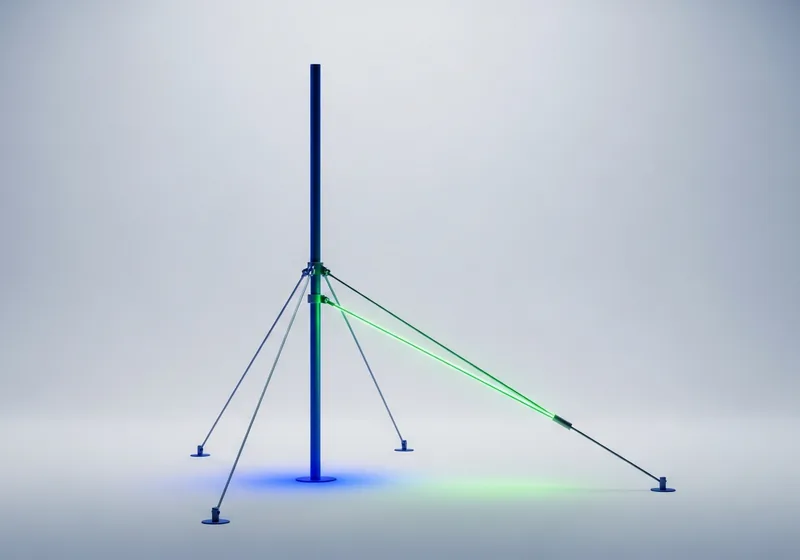
Think of the knee's ligaments like the guy-wires steadying a tent pole. Stretch one and the tent leans and shifts in the wind. A frayed guy-wire can often be re-tensioned and reinforced; a snapped one needs replacing. Knowing which wire, and how badly it is damaged, is the whole job.
Ligament injuries have a recognizable signature. If several of these fit you, a ligament is likely involved — and which one matters.
Many ligament injuries — the ACL especially — announce themselves with a pop you can hear or feel, often during a cut, twist, or hard landing.
A cruciate (ACL or PCL) tear often swells within hours. A collateral (MCL or LCL) sprain may swell more slowly, and stay localized to one side of the knee.
MCL pain sits along the inner knee, LCL along the outer. Cruciate injuries tend to ache deeper and more centrally.
The knee shifts, gives way, or feels like it might buckle — most noticeably when you turn, pivot, or cross uneven ground.
Confidence drops with cutting, twisting, or coming down stairs — you find yourself guarding the knee and avoiding certain moves.
A knee that repeatedly gives way or locks, or a significant injury with heavy swelling and instability, deserves prompt evaluation.
Watch for: a knee left unstable can grind down cartilage and the meniscus over time."Torn knee ligament" sounds like one diagnosis with one answer. It is not.
An MCL sprain and a complete ACL rupture are both "ligament injuries," but they could hardly be more different. The MCL, with its good blood supply, frequently heals well — even many grade III MCL tears are managed without surgery. A complete ACL tear, by contrast, rarely heals on its own, and for an active person who wants to cut and pivot, reconstruction is often the right call.
Most ligament injuries, though, are not complete tears. They are grade I and II sprains and partial tears — the large middle ground. That is where a brace-and-wait approach can leave a ligament healed loose and slack, and where full surgery is more than the problem needs.
It is also where regenerative care fits best: supporting a partially injured ligament to heal stronger and tighter. The first step is an honest, accurate read of which ligament you have injured and how badly — and Dr. Booth will tell you plainly if surgery is the better path for you.
"'Torn ligament' is not one diagnosis. Which ligament, and how badly, decides everything."
— Orthobiogen care philosophy
The MCL's blood supply lets it heal well; the ACL's location deep in the joint leaves it poor at healing on its own. Matching the treatment to the specific ligament and grade is the foundation of getting it right.
A small sample of your own blood is concentrated for its platelets and growth factors, then placed precisely at the injured ligament to calm the area and support a stronger, better-organized heal.
When a case calls for more, a small sample of your own bone marrow provides a richer mix of regenerative cells. Whether PRP or marrow fits best is a clinical decision Dr. Booth makes with you.
Regenerative care is powerful for sprains and partial tears. It is not a substitute for reconstructing a complete ACL tear in an active person — and we will tell you plainly which situation you are in.
For a ligament sprain or partial tear, patients are usually told to brace it and wait, or are pointed toward surgery. Here is how an orthobiologic approach differs for that middle ground.
| Brace & Rest Alone | Ligament Reconstruction Surgery | Orthobiogen |
|---|---|---|
| ✗ Immobilize the knee and hope the ligament heals on its own | ✗ Rebuild the ligament with a graft — a major operation | ✓ Support the partially torn ligament's own healing with your biologics |
| ✗ Best for mild sprains — a partial tear can still heal loose | ✗ Best reserved for complete tears in active people | ✓ Built for grade I–II sprains and partial tears — the large middle ground |
| ✗ No active support — some ligaments heal lax, leaving instability | ✗ Replaces the ligament rather than healing your own | ✓ Aims for a stronger, tighter heal of your native ligament |
| ✗ Time and a brace — and weeks of waiting to see | ✗ A tendon graft, anchors, anesthesia, and long rehab | ✓ Platelets or marrow drawn from your own body |
| ✗ Often no clear plan if the knee stays unstable | ✗ Operating room and months away from your activities | ✓ Outpatient, with your imaging walked through with you |
| ✗ Little guidance on whether waiting is even the right call | ✗ A major step when the injury may not need it | ✓ A clear answer — including telling you when surgery is the better path |
No — not every torn knee ligament needs surgery. Most ligament injuries are not complete tears; they are grade I and II sprains and partial tears, the large middle ground where full surgery is more than the problem needs. A complete ACL tear in an active person who wants to cut and pivot is usually a surgical conversation, and Dr. Booth will tell you plainly if surgery is the better path for you.
No. “Torn knee ligament” sounds like one diagnosis with one answer, but it is not. An MCL sprain and a complete ACL rupture are both ligament injuries, yet they could hardly be more different — the MCL has a good blood supply and often heals well even when partially torn, while the ACL, deep inside the joint, heals poorly on its own. Which ligament, and how badly, decides everything.
For sprains and partial tears, a brace-and-wait approach can leave a ligament healed loose and slack, while full reconstruction surgery is often more than the injury needs. Regenerative care fits that middle ground — supporting a partially injured ligament to heal stronger and tighter with your own platelets or marrow. Leaving a knee unstable also matters, because it can grind down cartilage and the meniscus over time.
Generally no. Regenerative orthobiologic treatment is typically not covered by insurance. If you move forward, the costs are discussed openly and in full before anything is scheduled — no surprises.
Start with a free 15-minute introductory telemedical consult — a no-pressure conversation about your history and any imaging you already have, with a candid read on whether regenerative care is a reasonable fit for your knee. The fastest way to begin is the secure online intake form, and Dr. Booth's team follows up with you directly.
The first step is a complimentary, 15-minute introductory telemedical consult. It is a no-pressure conversation to hear your story, look at what you have already tried, and give you a candid sense of whether regenerative care is a reasonable fit for your knee.
Please note: complimentary telemedical consults have limited availability because of Dr. Booth's clinical schedule. If a slot is not immediately open, we appreciate your patience — or you are welcome to request a standard in-person appointment instead, which can often be arranged sooner.
One more thing we believe in saying plainly: regenerative orthobiologic treatment is generally not covered by insurance. If you move forward, costs are discussed openly and in full before anything is scheduled — no surprises.
The fastest way to begin is our secure online intake form. You share your background once, and our team reaches out to you directly.
Knee pain rarely has a single cause — and these conditions often overlap and feed one another. Explore the others we treat with regenerative, orthobiologic care.
Wear-and-tear cartilage loss in the knee joint.
Learn more →Damage to the knee's C-shaped cushion cartilage.
Learn more →Kneecap pain and softening of the cartilage behind it.
Learn more →Knee tendon pain, often from overload and overuse.
Learn more →
Call to schedule, or ask about a free 15-minute introductory telemedical consult. Consult slots are limited by Dr. Booth's schedule — if none is open, an in-person appointment can often be arranged sooner.