

Regenerative, orthobiologic care for knee osteoarthritis — using your body's own biology to calm the joint and protect the cartilage you still have.
Your knee is a hinge joint where the ends of the bones are capped with cartilage — a smooth, slick surface that lets the joint glide and helps absorb the load of every step you take.
Osteoarthritis is the gradual thinning and roughening of that cartilage. As it wears, the joint loses some of its glide and cushioning, and the lining of the joint becomes inflamed and irritated.
Here is what most patients are never told: the pain of knee arthritis is not simply "bone grinding on bone." It comes from inflammation in the joint lining, irritation of the bone just beneath the cartilage, and the muscles and soft tissues straining around a joint that is working harder than it should. Those are the parts that can be treated.
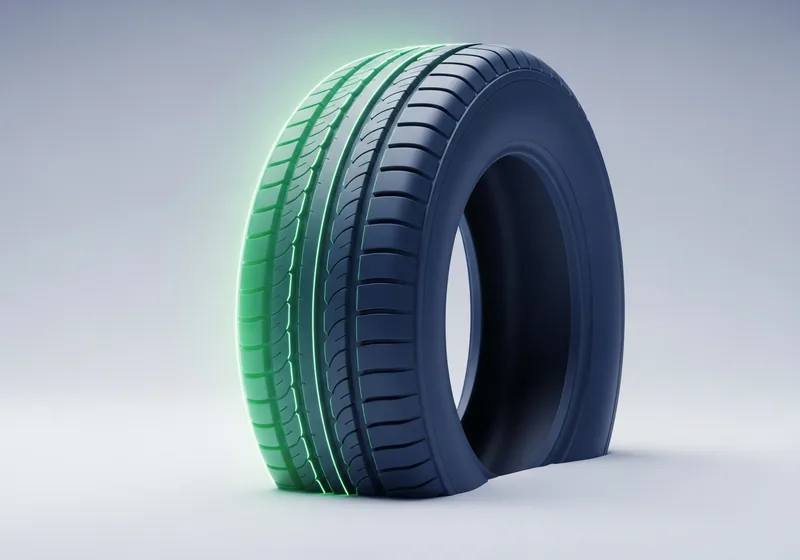
Think of cartilage like the tread on a tire. New, it grips and rolls smoothly. Worn, it is thinner and rougher — but a worn tire is not a destroyed one, and how it is driven and maintained still decides how far it goes. The goal is to protect the tread you still have, not to assume the only answer is a whole new wheel.
No two knees wear the same way, but arthritic knees share a recognizable pattern. If several of these fit you, it is worth a closer look.
Pain that builds through the day with walking, standing, or activity, and settles down with rest — the joint complaining about the load it is carrying.
Stiff and creaky getting out of bed, or standing up after sitting a while, until the knee "warms up" and loosens with movement.
A sensation of the joint grinding or grating as you bend it — sometimes something you can feel with a hand on the kneecap.
Stairs load the kneecap and joint surfaces hard. For many patients, heading down the stairs is the move they dread most.
The knee puffs up or feels warm after a long day or a big effort — a visible sign that the joint lining is inflamed.
A knee that locks and won't fully straighten, repeated buckling or giving way, or a suddenly hot, very swollen knee.
Watch for: these need prompt, in-person evaluation rather than waiting it out.Few phrases land harder than hearing you are bone-on-bone. It sounds final — as if the joint is already gone and a replacement is the only thing left.
Here is the truth worth knowing: "bone-on-bone" is not a precise medical diagnosis. It is loose shorthand for a narrowed space on an X-ray. An X-ray does not even show cartilage directly — it shows the gap between the bones, and when that gap looks thin, the joint gets labeled "bone-on-bone."
And cartilage wear is remarkably common with age, including in people with no knee pain at all. In pain-free, uninjured adults, cartilage defects show up on MRI in roughly 11% of those under 40 and 43% of those 40 and older. A worn-looking scan is, very often, just a knee showing its mileage.
So the image does not, by itself, decide your future. Your pain, your function, your goals, and how much healthy tissue remains all matter just as much — which is why Dr. Booth examines the knee and reviews your imaging with you before recommending anything.
"'Bone-on-bone' is a phrase, not a verdict."
— Orthobiogen care philosophy
An arthritic knee is not just mechanically worn — the joint lining is inflamed and the environment around the cartilage is unhealthy. Calm that inflammation and you change how the joint feels and functions.
A small sample of your own blood is concentrated for its platelets and growth factors and placed into the joint to calm inflammation and support a healthier cartilage environment. In randomized trials, PRP has reduced knee arthritis pain more than placebo injections, and more than hyaluronic-acid "gel" shots at 6 to 12 months.
When a case calls for more, a small sample of your own bone marrow provides a richer mix of regenerative cells. Whether PRP or marrow is the better fit is a clinical decision Dr. Booth makes with you — not a one-size-fits-all package.
The goal is not to grow a brand-new joint. It is to calm the knee, support the cartilage you still have, and keep you active — delaying, and sometimes avoiding, a replacement.
Most patients with knee arthritis are offered two paths: cortisone shots until they stop working, then a knee replacement. Here is how an orthobiologic approach differs.
| Cortisone Injections | Knee Replacement Surgery | Orthobiogen |
|---|---|---|
| ✗ Quiets inflammation for a few months at a time | ✗ Removes the joint surfaces, replaces them with metal and plastic | ✓ Calms the joint and supports the cartilage with your own biologics |
| ✗ Does nothing for the cartilage — repeated use can be hard on it | ✗ The natural joint is gone for good | ✓ Aims to protect and support the cartilage you still have |
| ✗ Corticosteroid — a medication, not a repair | ✗ A metal-and-plastic implant with a finite lifespan | ✓ Platelets or marrow drawn from your own body |
| ✗ Wears off in months; doses are capped per year | ✗ Irreversible; a later revision is a harder operation | ✓ Repeatable, with nothing removed or replaced |
| ✗ Often a brief visit with little imaging review | ✗ Major surgery, a hospital stay, and months of rehab | ✓ Outpatient, with your imaging walked through with you |
| ✗ "Try a shot and see," with little candidacy screening | ✗ A major, final step for a knee that may respond to less | ✓ An honest answer on whether you are a candidate, first |
No. A replacement is one option, not an inevitability. Much of knee arthritis pain comes from inflammation and an irritated joint environment rather than the cartilage wear alone — and calming that, while supporting the cartilage you still have, helps many people stay active and delay or avoid surgery.
“Bone-on-bone” is not a precise medical diagnosis — it is shorthand for a narrowed space on an X-ray, and an X-ray does not even show cartilage directly. Worn cartilage is common in people with no pain at all: it appears on MRI in roughly 11% of pain-free adults under 40 and 43% of those 40 and older. The scan is a starting point, not a verdict.
They work differently. Cortisone quiets inflammation for a few months but does nothing for the cartilage. PRP, concentrated from your own blood, is used to calm the joint and support a healthier cartilage environment — and in randomized trials it has reduced knee arthritis pain more than placebo injections, and more than hyaluronic-acid gel shots, at 6 to 12 months.
Generally no. Regenerative orthobiologic treatment is typically not covered by insurance. If you move forward, the costs are discussed openly and in full before anything is scheduled — no surprises.
Start with a free 15-minute introductory telemedical consult — a no-pressure conversation about your history and any imaging, with a candid read on whether regenerative care is a reasonable fit for your knee. The fastest way to begin is the secure online intake form, and Dr. Booth's team follows up with you directly.
In a systematic review of nearly 5,000 knees belonging to adults with no knee pain and no injury, worn cartilage and meniscal tears turned up at a steadily rising rate with age — a reminder that a worn-looking knee scan is often just the knee showing its years.
Source: Culvenor AG, et al. Prevalence of knee osteoarthritis features on MRI in asymptomatic uninjured adults: a systematic review and meta-analysis. Br J Sports Med. 2019;53(20):1268–1278. Figures describe adults with no knee pain and no injury.
The first step is a complimentary, 15-minute introductory telemedical consult. It is a no-pressure conversation to hear your story, look at what you have already tried, and give you a candid sense of whether regenerative care is a reasonable fit for your knee.
Please note: complimentary telemedical consults have limited availability because of Dr. Booth's clinical schedule. If a slot is not immediately open, we appreciate your patience — or you are welcome to request a standard in-person appointment instead, which can often be arranged sooner.
One more thing we believe in saying plainly: regenerative orthobiologic treatment is generally not covered by insurance. If you move forward, costs are discussed openly and in full before anything is scheduled — no surprises.
The fastest way to begin is our secure online intake form. You share your background once, and our team reaches out to you directly.
Knee pain rarely has a single cause — and these conditions often overlap and feed one another. Explore the others we treat with regenerative, orthobiologic care.
Damage to the knee's C-shaped cushion cartilage.
Learn more →Kneecap pain and softening of the cartilage behind it.
Learn more →Knee tendon pain, often from overload and overuse.
Learn more →ACL/PCL and MCL/LCL sprains and joint instability.
Learn more →
Call to schedule, or ask about a free 15-minute introductory telemedical consult. Consult slots are limited by Dr. Booth's schedule — if none is open, an in-person appointment can often be arranged sooner.